
When it comes to picking the best cameras for photo booths, you’re usually looking at a choice between a DSLR, a mirrorless camera, or a top-notch tablet like an iPad. Honestly, the right one for you boils down to what your event needs – it’s all about striking that perfect balance between pro-level photos, a system that’s a breeze to use, and easy social media sharing.
Your Guide to Selecting the Perfect Photo Booth Camera
Welcome! Let’s talk about choosing the heart and soul of your photo booth. Whether you’re setting up for a wedding fit for a royal or a swanky corporate do for someone like Elon Musk, the camera you pick is everything. It’s the one thing that separates those grainy, quickly forgotten snaps from the sharp, vibrant keepsakes people will actually want to keep.
This guide is designed to cut through all the tech-speak. We’ll demystify everything from the powerhouse DSLRs and sleek mirrorless systems right through to those wild 360-degree video rigs. We’ll get into the features that really matter, break down your options for lenses and lighting, and give you solid, practical advice to make sure every photo is picture-perfect and ready to be shared.
Why Your Camera Choice is a Game Changer
Let’s be clear: the camera is the photo booth. It dictates the quality of every single shot, from sharpness and colour to how the whole setup copes when the lights go down. A great camera makes everyone look like a star, which in turn makes your event or brand look fantastic. And people are catching on – the demand for this kind of quality experience is going through the roof.
In fact, the UK photo booth market has seen some serious growth, valued at USD 42.69 million in one year and on track to double to USD 84.96 million by 2033. That’s a compound annual growth rate (CAGR) of 7.85%! It just goes to show how much people want fun, interactive experiences at their events.
Choosing your photo booth camera is like casting the lead in a blockbuster film. A DSLR is your seasoned A-lister, like George Clooney, delivering a flawless performance every single time. An iPad? That’s the charismatic newcomer, perfect for a modern, social-media-savvy crowd.
The Main Camera Types at a Glance
So, what are your options? When you’re looking at cameras for photo booths, you’ll generally find yourself choosing between three main contenders. Each has its own strengths, making it a better fit for different types of events and budgets.
Here’s a quick look at the main players to help you decide which is the best fit for your photo booth empire.
Quick Camera Comparison For Photo Booths
| Camera Type | Best For | Key Advantage | Consideration |
|---|---|---|---|
| DSLR | High-end events, weddings, corporate functions | Unbeatable image quality, great in low light | Bulkier, more complex setup, higher cost |
| Mirrorless | Versatile events, video booths, portable setups | Compact, excellent video, fast autofocus | Can be pricey, lens selection varies |
| Tablet/iPad | GIF booths, social sharing, budget-friendly events | All-in-one simplicity, seamless software | Lower image quality, struggles in poor lighting |
Ultimately, the right camera is the one that aligns with the experience you want to create and the audience you’re serving.
- DSLR Cameras: These are the undisputed workhorses of the professional photo booth world. They’re famous for their incredible image quality, a massive range of lenses, and being utterly reliable, especially in tricky low-light situations.
- Mirrorless Cameras: Think of these as the modern, more compact cousin of the DSLR. They bring fast autofocus, fantastic video capabilities, and brilliant image quality to the table, all in a much lighter package.
- Tablets (like iPads): Praised for their dead-simple operation and slick software integration, tablets are a brilliant choice for GIF booths and any event where getting photos onto social media instantly is the top priority. If you go this route, it’s worth understanding how to choose a good camera phone, as many of the same principles apply to getting the best out of a mobile device.
DSLR vs Mirrorless vs iPad: The Main Contenders
Choosing the right camera for your photo booth is a bit like casting the lead actor for a blockbuster film. Each type brings a completely different vibe and performance to the set, and your choice will absolutely define the final cut. Let’s break down the main contenders and see which star is right for your event’s script.
DSLRs: The Seasoned Professionals
Think of a DSLR (Digital Single-Lens Reflex) camera as the Tom Hanks of the photography world. They are the seasoned, award-winning pros known for rock-solid reliability and phenomenal image quality. For years, they’ve been the undisputed gold standard for photo booth operators, and for very good reason.
Their bigger sensors drink in more light, delivering crisp, vibrant photos even in the dimly lit chaos of a wedding reception. This makes them a no-brainer for high-end events where beautiful, frame-worthy prints are non-negotiable. Turning up with a DSLR setup tells your clients you’re serious about capturing memories that look just as good in a photo album as they do on a screen.
Of course, like any big star, they come with a bit of an entourage. DSLRs are bulky and heavy, so you’ll need a sturdy booth to house them. There’s also a steeper learning curve, but once you master the settings, you get total creative control. You can nail the perfect shot every single time, no matter what the venue throws at you.
Mirrorless Cameras: The Rising Stars
Mirrorless cameras are the modern A-listers—the Zendayas of the camera world. They’re sleek, packed with cool tech, and deliver a performance that easily rivals their older DSLR cousins, but in a much more compact and lightweight package. This makes them absolutely perfect for portable setups and trendy open-air booths.
One of their killer features is a ridiculously good autofocus system, especially for video. This makes them a fantastic choice if you’re offering video messages or slick slow-motion clips. Many also have a silent electronic shutter, which is a total game-changer for quiet, upscale events where the constant click-clack of a DSLR might kill the mood. Imagine capturing candid moments at a swanky corporate do without interrupting the ambience.
The biggest advantage of a mirrorless system is its ‘what you see is what you get’ electronic viewfinder. It shows you the final exposure in real-time, removing all the guesswork and ensuring every photo is perfectly lit before you even press the button.
Now, their battery life can be a bit shorter than a DSLR’s, and the lens selection is still catching up for some brands. But their incredible blend of quality, portability, and modern features is making them an insanely popular choice for pro photo booth businesses.
This decision tree helps you visualise which camera path best suits your primary goal, whether it’s top-tier image quality, instant social sharing, or dynamic video.
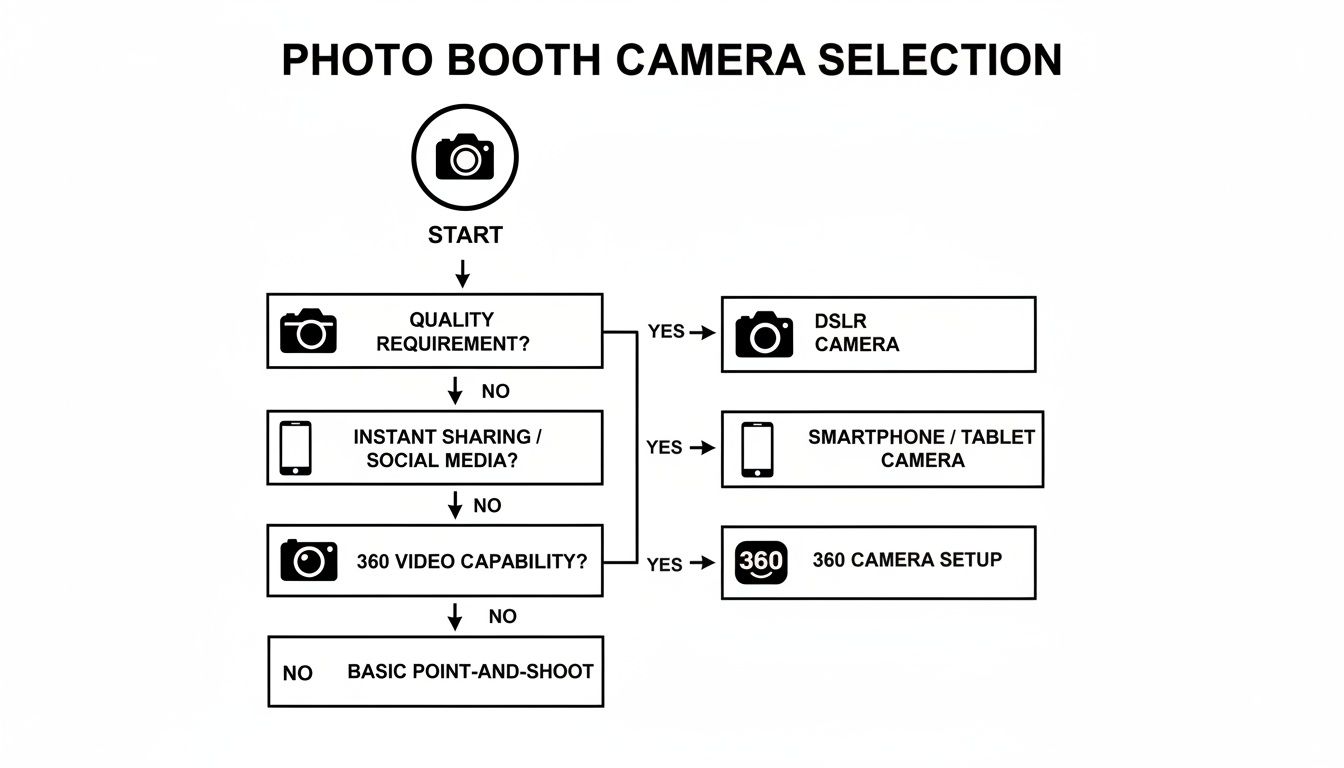
As you can see, for premium, high-quality still images, a DSLR or mirrorless camera is the way to go. If you’re all about getting content onto social media instantly, the iPad is your hero.
iPads and Tablets: The Versatile All-Rounders
Finally, we have iPads and other high-end tablets. These are the versatile character actors of the photo booth scene, like Dwayne “The Rock” Johnson. They might not win an Oscar for best image quality against a DSLR, but they absolutely nail roles that demand simplicity, speed, and fun. They are the all-in-one solution that has completely taken over the event world.
Their real superpower is seamless software integration. With slick, powerful apps, you can create a fully branded experience offering not just photos but also:
- Animated GIFs: Perfect for capturing those hilarious, looping moments.
- Boomerangs: The ever-popular, endlessly shareable back-and-forth clips.
- Digital Props: Fun overlays, filters, and AR masks that guests absolutely love.
This makes tablet-based booths a massive hit at parties and brand activations where the main goal is getting content shared on social media, fast. The intuitive touchscreen means guests need zero instruction; they just tap and go. While the camera will struggle in low light compared to a dedicated system, for a buzzing party where the vibe is more important than pixel-perfect prints, an iPad is an unbeatable performer.
Decoding the Tech Specs That Actually Matter
Right, let’s talk tech. But forget the dry, boring manuals. Think of camera specs like the stats on a top-tier athlete’s card. Some numbers are just for show, but a few key ones tell you if you’ve got a world-beater on your hands.
Getting this right is the difference between blurry, sad-looking snaps and vibrant, professional portraits that your clients will be desperate to frame. We’re going to break down the four specs that genuinely make or break a photo booth camera, so you can pick a true champion for your events.
Resolution: The Power of Detail
First up, resolution, which you’ll see measured in megapixels (MP). In simple terms, this is the camera’s ability to capture fine detail. More megapixels mean a sharper picture that you can blow up for large prints without it turning into a blocky mess.
For most photo booth work, a camera with 18MP or more is a brilliant starting point. That’s more than enough muscle to deliver beautiful 6×4 prints and ensures every digital photo looks razor-sharp on Instagram. It’s what separates a photo that looks “alright” on a phone screen from one that looks absolutely stunning hanging on a client’s wall.
Sensor Size: The Soul of the Camera
If resolution is the camera’s muscle, then sensor size is its soul. It’s the piece of silicon that actually drinks in the light to create an image. And the rule here is refreshingly simple: bigger is better. A larger sensor captures more light, which directly translates to richer colours, cleaner images, and far better performance when the lights go down.
This is the huge chasm between a professional camera and your phone. A big, juicy full-frame sensor can work wonders in a dimly lit wedding reception, producing images with that polished, high-end feel you’d expect from a magazine shoot with Taylor Swift. That said, the more common and budget-friendly APS-C (or crop) sensors are still fantastic workhorses that deliver outstanding results.
Don’t get hypnotised by megapixels alone. The sensor size is arguably the most important ingredient for achieving that premium, professional look. A camera with a larger sensor will almost always outshine one with a smaller sensor, even if it has fewer megapixels.
When you’re really getting into the nitty-gritty, it’s worth understanding camera optics like lossless zoom and sensor crop, as these can seriously impact your image quality and creative flexibility.
ISO: The Night Vision Superpower
Next, we have ISO. Think of this as your camera’s night vision goggles. It controls how sensitive the sensor is to light. Cranking up the ISO makes the sensor work harder, letting you capture bright, clear photos in dark environments without having to resort to a blinding flash.
But this power isn’t without its kryptonite. Push the ISO too high, and you’ll start to see digital “noise” – a sort of grainy texture that can make an image look a bit rough. A camera with a solid ISO range can handle the moody lighting of a corporate bash or an evening party with real grace, keeping your photos clean and vibrant.
Autofocus: The Speed and Accuracy
Finally, let’s talk autofocus (AF). This is your camera’s lightning-fast reflexes. For a photo booth, where people are laughing, dancing, and pulling silly faces in the blink of an eye, a fast and reliable autofocus system isn’t just a nice-to-have; it’s absolutely essential.
You need a camera with an AF system that’s on the ball. Look out for these features:
- Face Detection: The camera automatically finds faces in the frame and locks focus on them. Simple, effective, and a must-have.
- Eye AF: This is the next level. It’s smart enough to lock focus directly onto a person’s eye, which is the secret to creating tack-sharp, captivating portraits.
- Speed: A snappy AF system is crucial for keeping up with all the action, preventing blurry shots and ensuring you never miss the perfect moment.
The evolution of the UK photo booth scene is directly tied to these tech improvements. The boom really started when early digital booths got kitted out with high-res DSLRs and responsive touchscreens. This leap in quality was a huge factor in the European market growing by 4.5% back in 2015, with the UK, France, and Switzerland leading the charge. It just goes to show how much clients value a great photo.
Why Lenses and Lighting Are Your Secret Weapons
If your camera is the star of the show, then think of your lens and lighting as the Oscar-winning director and cinematographer. They’re the secret weapons that turn a decent photo into an absolutely stunning one. Honestly, a brilliant camera is a great start, but it’s the right glass and glow that really nail that professional, high-end finish your clients are paying for.
Think of it like this: the camera captures the scene, but the lens tells the story. It dictates the perspective, shapes the mood, and directs everyone’s focus. In the photo booth world, a great lens is the difference between a cramped, awkward group huddle and a dynamic, fun-filled shot that everyone can’t wait to share.
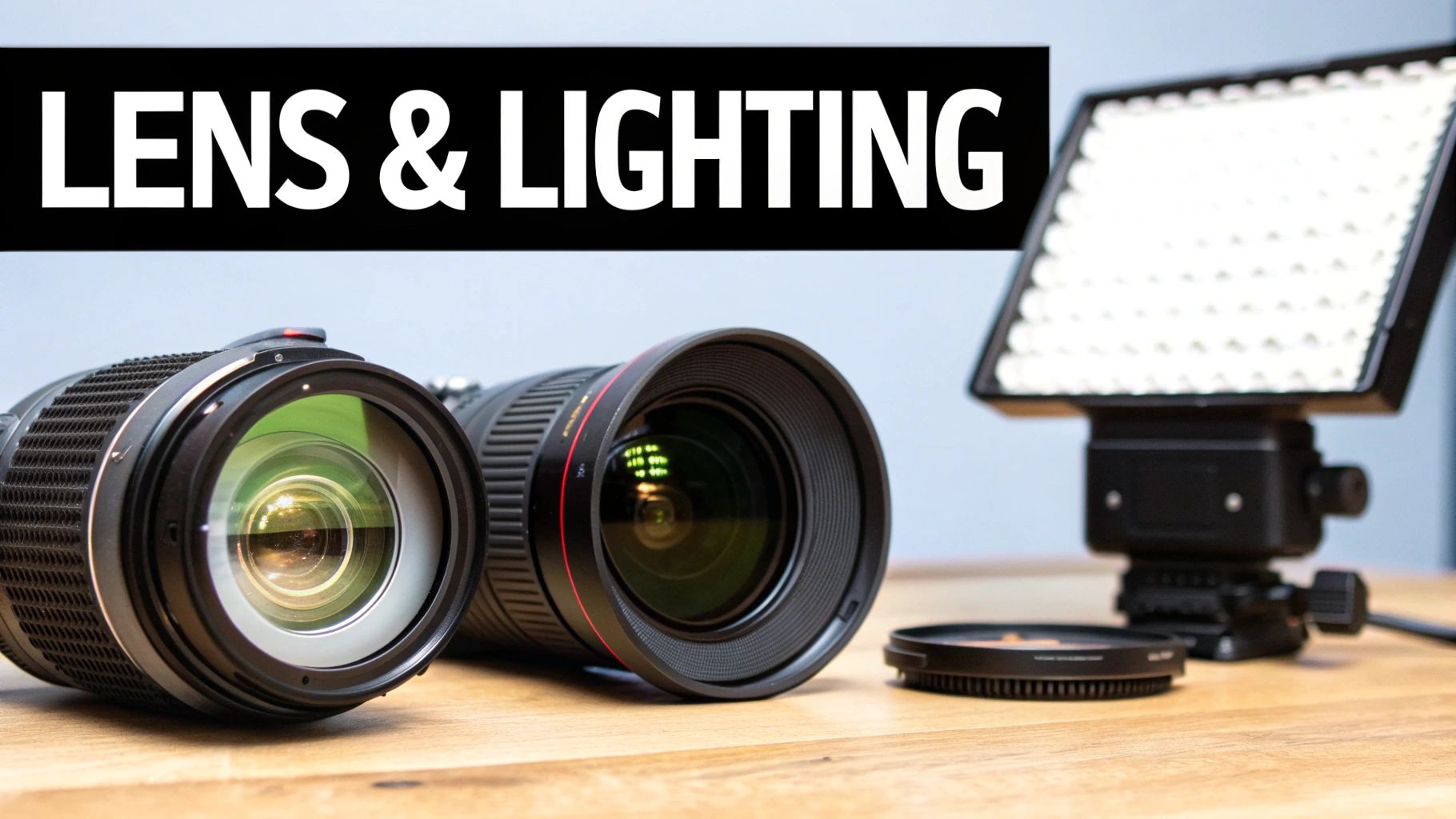
Choosing the Right Lens for the Job
The lens you screw onto your camera has a massive impact on the look and feel of your final images. A standard 18-55mm kit lens—the one that often comes bundled with DSLRs and mirrorless cameras—is a perfectly fine, budget-friendly starting point. It gives you a decent range to play with, letting you zoom in for tighter portraits or pull back for small groups.
But if you want to properly level up your game, you’ll want to look at a couple of other options that are practically made for photo booth work.
- Wide-Angle Lenses (18-35mm range): These are your best friends for fitting a whole gaggle of laughing mates into one shot, especially in those cosy enclosed booths. They capture more of the scene, so you can stop worrying about cropping someone’s head out of the frame.
- Prime Lenses (like a 50mm f/1.8): A prime lens has a fixed focal length, meaning it doesn’t zoom. Its superpower, though, is its incredibly wide aperture. An aperture like f/1.8 lets in a massive amount of light and creates that gorgeous, creamy, blurred-background effect known as “bokeh.” It makes your subjects pop and gives every portrait a look worthy of a royal wedding.
The Magic of Professional Lighting
Right, on to the real magic: lighting. Bad lighting is the undisputed villain of every photo booth. It conjures up harsh shadows, unflattering skin tones, and grainy, noisy pictures. You could have the best camera on the planet, but without great light, your photos will just fall flat. This is where you bring in your own portable Hollywood lighting crew.
For consistent, flattering results every time, you absolutely must ditch the camera’s built-in pop-up flash and get some proper external lighting. The aim is to create soft, even light that wraps around your guests, making everyone from your gran to a supermodel like Cara Delevingne look their absolute best.
Professional lighting isn’t just about making things brighter; it’s about controlling the light to craft a specific look. It banishes those dreaded ‘raccoon eyes’ from harsh overhead venue lights and ensures every single photo has that polished, studio-quality feel.
Lighting Setups That Always Work
Don’t worry, you don’t need a complicated film-set lighting rig. A simple but effective setup can make a world of difference. Your two main choices are strobes (flashes) and continuous LED lights. Strobes give you a powerful burst of light that freezes motion perfectly, while continuous lights are always on, which can be great for helping guests pose and see how they look before the shot is taken.
Here are a couple of my go-to configurations that never let me down:
| Lighting Style | Description | Best For |
|---|---|---|
| Ring Light | A single circular light that the camera shoots through. It creates a soft, almost shadowless look and a signature ‘catchlight’ in the eyes. | Solo portraits and small groups. It’s incredibly flattering and a massive hit for beauty-style shots. |
| Softbox or Umbrella | A flash or LED modified with a large softbox or umbrella. This diffuses the light, creating a broader, softer source that mimics a natural window. | Just about any situation, but especially larger groups. It provides beautiful, even illumination across the whole scene. |
At the end of the day, combining a quality lens with controlled, professional lighting is the key to unlocking your camera’s full potential. It’s this dynamic duo that guarantees every click results in a flawless, share-worthy memory.
Bringing It All Together: Software and Your Event Workflow
You can have the best camera on the planet, but it’s the software that truly brings the photo booth experience to life. This is the magic behind the curtain, the digital command centre that makes everything feel slick, seamless, and a whole lot of fun for your guests.
The secret sauce here is tethering. Picture an invisible digital string connecting your camera straight to a computer or tablet. The second the shutter clicks, that photo zips over to a screen for everyone to see, share, and print. It’s this instant gratification that gets people queuing up for more.
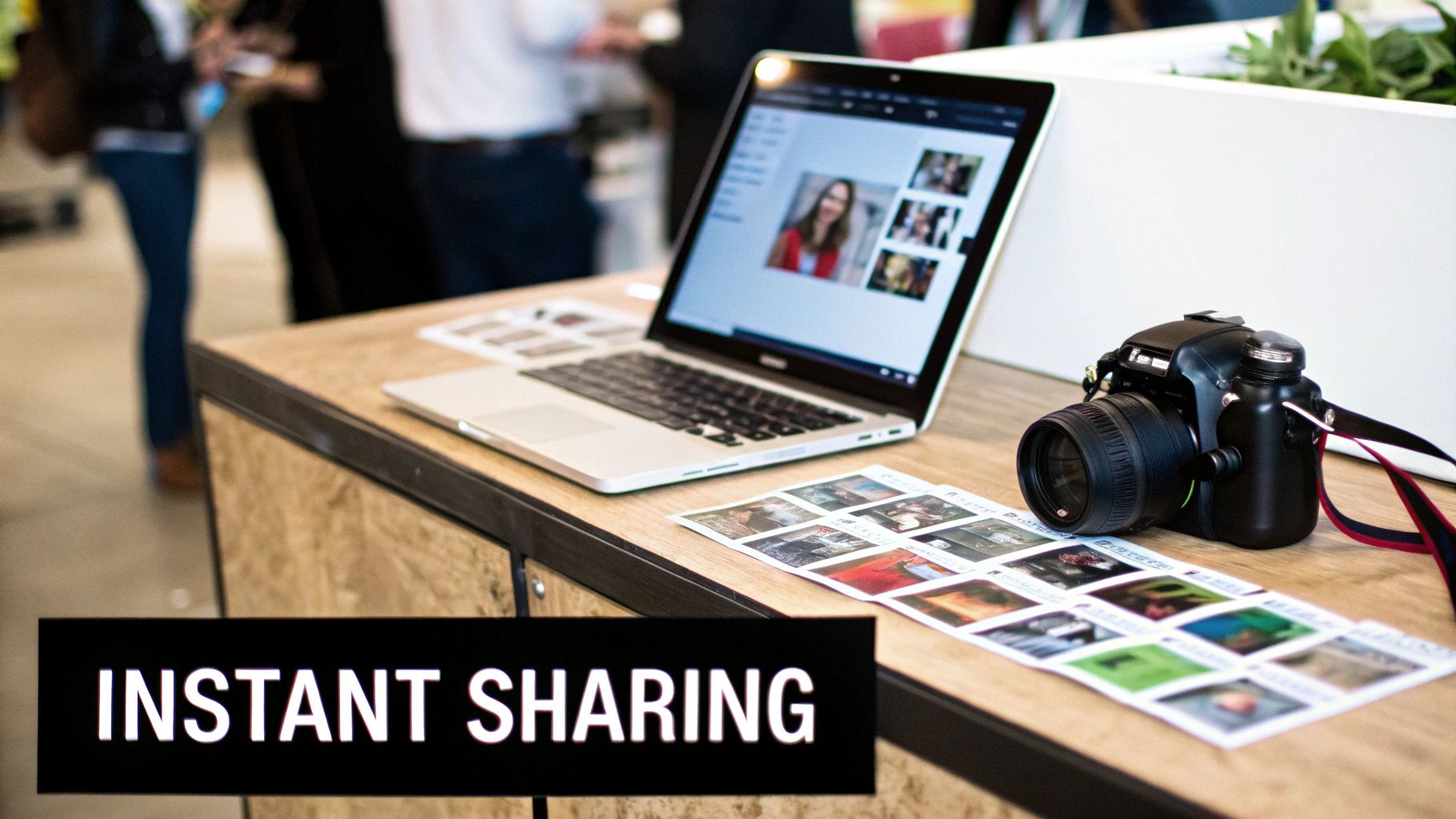
The Software That Powers the Party
Picking the right software is every bit as crucial as picking the right camera. This is the bit of kit that lets you slap a custom-branded overlay on the photos for a swanky corporate do, or create the laugh-out-loud GIFs and Boomerangs that guests can’t wait to share.
Good software should be your workhorse, automating the entire process so you can focus on running the event. Here’s what you should be looking for:
- Live View: An absolute must-have. It shows guests a real-time preview of themselves on-screen, letting them perfect their poses before the flash fires.
- Customisable Templates: The ability to easily add logos, event details, and cool designs to create branded keepsakes, both digital and printed.
- Instant Digital Sharing: Lets guests email, text, or Airdrop their creations straight to their phones, right from the booth.
- Creative Formats: Don’t just stop at photos! The best software offers fun extras like animated GIFs, Boomerangs, and even short video clips.
Nailing Your On-the-Day Workflow
A smooth, hiccup-free event doesn’t just happen by magic. It’s the result of a meticulously planned, well-oiled workflow that makes you look like a total pro.
Think of your workflow as your event-day blueprint. A solid plan means you’re ready for anything, from dodgy lighting to a massive queue of guests, guaranteeing a flawless experience from the first snap to the last.
In the UK, photo booths are massive for events and marketing. The corporate world makes up a huge 45% of the market, and rentals account for 21% of the entire European photo booth scene. A bulletproof workflow is the only way to manage that kind of volume while keeping quality sky-high. You can discover more about the photo booth market to see just how big this industry is.
A winning workflow can be broken down into three simple phases:
- Pre-Event Prep: This is your homework stage. Test every single piece of gear—camera, lights, software, printer—in your office, not when you get to the venue. Get your custom templates designed and loaded up, and check every cable and connection is solid.
- On-Site Execution: Get there early. Set up your booth and do one last test run, paying close attention to the actual lighting in the room. You’ll need to manage the flow of guests with clear instructions; having an attendant on hand is a great way to keep the energy up and the line moving.
- Post-Event Delivery: The gig isn’t over when the lights come on. Get the complete digital gallery over to your client as quickly as possible. This is also the perfect time to ask for feedback so you can make your next event even better.
Recommended Setups For Popular Events
To give you a head start, we’ve pulled together a few go-to setups that are proven to work brilliantly for different types of events. Think of these as reliable starting points you can tweak to fit your specific needs.
| Event Type | Recommended Camera | Ideal Lens | Lighting Solution |
|---|---|---|---|
| Weddings & Parties | Canon EOS 250D | 18-55mm f/3.5-5.6 | Ring Light or Beauty Dish |
| Corporate Events | Nikon D5600 | 35mm f/1.8G Prime | Two Softbox Strobes |
| Outdoor Festivals | Sony Alpha a6400 | 16-50mm f/3.5-5.6 | On-Camera Flash with Diffuser |
| 360° Booths | GoPro HERO11 Black | Built-in Wide Lens | LED Panel Lights (3-4 point setup) |
These combinations balance quality, ease of use, and reliability, ensuring you can walk into any event with the confidence that your gear won’t let you down.
Your Photo Booth Camera Questions Answered
Still got a few questions rattling around? You’re not the only one. Picking a camera for your photo booth can feel like trying to choose a winner at the Grand National. Let’s tackle some of the most common head-scratchers so you can make your final choice with confidence.
Do I Need a 4K Camera for My Photo Booth?
Honestly, for standard photos, absolutely not. Think of 4K as a video feature. It’s a must-have if you’re offering video messages or running a flashy 360-degree video booth, but for still images, it’s complete overkill.
If you want crisp, beautiful prints that will look fantastic on the fridge, just focus on a camera with at least 18 megapixels and a decent-sized sensor. That’s your ticket to quality.
What Is the Best Lens for a Small, Enclosed Booth?
When you’re working in a tight space, a wide-angle lens is your best mate. Look for a focal length somewhere in the 18-35mm range on a crop-sensor camera – it’s the sweet spot.
This lets you fit a whole group of people into the frame without them having to suck in their stomachs and pile on top of each other. The standard 18-55mm kit lens that comes bundled with many cameras is a brilliant and budget-friendly place to start.
Can I Just Use an iPad Instead of a DSLR?
You certainly can, and loads of companies do! iPad-based booths are incredibly popular for a reason: they are dead simple to use and fantastic for instant social sharing.
Now, will the photo quality ever compete with a professional DSLR, especially in low light? No. But their slick software and fun, user-friendly feel make them a killer option for parties where GIFs and digital shares are the main event. It’s all about speed and fun.
The ‘best’ camera is simply the one that fits the gig. A high-end DSLR is the star for a glamorous wedding, while an iPad is perfect for a lively birthday party where everyone wants to get their pictures on Instagram immediately.
Choosing the right camera all comes down to the kind of experience you want to create. Whether you go for the professional polish of a DSLR or the interactive buzz of a tablet, the goal is always the same: capture brilliant memories that people will be talking about long after the lights come up.