Let’s be honest, what’s a photo booth without the instant, hold-it-in-your-hand photo? It’s the printer that turns a fun digital moment into a real-life keepsake guests can stick on their fridge. But this isn’t your clunky home office printer we’re talking about; it’s the high-performance engine that makes the whole experience magical.
This is the secret sauce, the piece of kit that works tirelessly behind the scenes to deliver flawless, professional-grade photos in seconds.
The Unsung Hero of Your Event
Picture the scene at a glitzy awards ceremony hosted by someone like Jimmy Kimmel or a fairytale wedding. The flash pops, a group of friends strike a pose, and before they can even decide on their next cocktail, a perfect, glossy print is ready for them. That little bit of magic? It’s all down to the photo booth photo printer.
This guide is here to lift the lid on what makes these machines so special. Understanding the tech is the key to creating a seamless, impressive experience that guests will rave about, rather than a clunky one that leaves them waiting.
Why You Can’t Just Use Any Old Printer
The demand for killer event experiences has exploded, and photo booths are no longer just a nice-to-have; they’re a must-have. The UK, in particular, has gone mad for them, becoming a massive hub for photo booth fun in Europe. Way back in 2015, market research was already showing a 4.5% jump in key European markets like ours, and that love affair has only grown.
A professional-grade printer is built from the ground up to handle the chaos of a live event, boasting features your home inkjet can only dream of:
- Blistering Speed: We’re talking a stunning, high-quality print in under 15 seconds. They can churn out hundreds of photos in an hour without breaking a sweat.
- Built to Last: The prints come out instantly dry, waterproof, and smudge-proof. Guests can grab them straight away without worrying about ruining them.
- Rock-Solid Reliability: These things are absolute workhorses, designed for non-stop action. The last thing you want is a printer jam in the middle of a packed event.
Think of it this way: using a home printer at a wedding is like trying to cater a banquet with a single microwave. It’s just not the right tool for the job. A professional photo booth printer is the fully kitted-out commercial kitchen, ready to serve hundreds of happy guests without a hitch.
At the end of the day, the printer is what bridges the gap between a fleeting digital snap and a cherished memory. It’s the final, crucial step that delivers the joy and tangible value of the photo booth, making sure the fun lasts long after the lights go down.
Dye-Sublimation Printers vs The Competition
Picture this: you’ve planned an event worthy of a rock star like Harry Styles. The last thing you want is a queue of guests impatiently tapping their feet, waiting for a smudgy, damp photo to slowly crawl out of a printer. The secret to that instant, high-quality magic everyone loves? It’s all in the tech.
Let’s pull back the curtain and see what separates the professional workhorses from the amateur contenders.
The Undisputed Champion: Dye-Sublimation
In the world of professional photo booths, the undisputed champion is the dye-sublimation printer, or “dye-sub” for short. This isn’t just a printer; it’s a miniature, high-speed photo lab that fits on a table.
Instead of spraying wet ink, a dye-sub printer uses a special ribbon packed with solid dyes—cyan, magenta, and yellow. A thermal print head heats up, turning the solid dye into a gas (that’s the “sublimation” part), which then sinks into the surface of the photo paper. It does this one colour at a time, finishing with a clear protective overcoat that seals the deal.
The whole process is blindingly fast. Better yet, the photo emerges from the machine completely dry, waterproof, and fingerprint-proof. Guests can grab their print and get straight back to the action. No fuss, no smudges.
The Portable Challenger: ZINK Technology
Next up, we have ZINK, which stands for “Zero Ink.” It’s a clever bit of kit you’ll often find in those small, pocket-friendly printers. The real magic here is in the paper, which has layers of colourless dye crystals embedded within it. The printer simply uses heat to activate these crystals, bringing the image to life without a single ink cartridge.
While ZINK printers are brilliantly convenient for personal use, they don’t quite measure up to the professional finish of dye-sublimation. The colours can sometimes be less vibrant, and the prints might not have the same long-lasting quality you’d want for a premium event keepsake. They’re great for a casual get-together, but for a wedding or a corporate bash, dye-sub is the industry standard for a very good reason.
This handy little decision tree can help you visualise which printer is right for your needs.
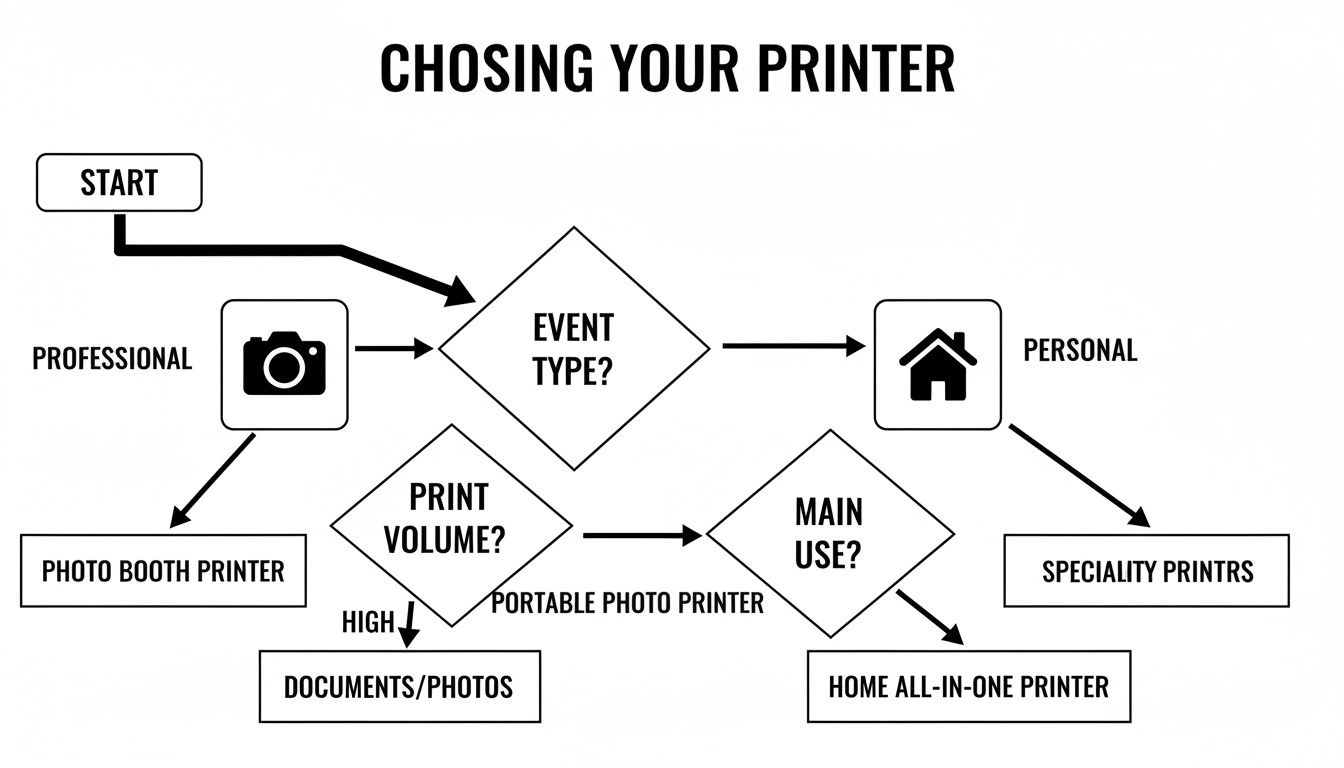
As you can see, the path splits based on one simple question: what kind of event are you hosting? For pro-level results, the choice is crystal clear.
Why Your Home Inkjet Printer Should Stay Home
Look, it’s tempting to think that inkjet printer sitting in your home office could handle the job. But let’s be honest, it’s just not built for the chaos and demand of a live event. Inkjet printers work by spraying microscopic droplets of wet ink onto paper, which causes a few headaches in a photo booth setting.
- Painfully Slow: An inkjet can take a minute or more to produce a single photo. A professional dye-sub printer smashes that out in under 15 seconds.
- The Smudge Factor: The prints come out wet and need time to dry. Guests, in their excitement, are guaranteed to smudge them.
- Constant Refills: You’d be swapping out tiny, expensive ink cartridges all night and refilling the paper tray every five minutes. It’s a recipe for delays and frustration.
Think of it this way: a professional dye-sub printer is built for throughput, ready to churn out hundreds of photos an hour without breaking a sweat. An inkjet is designed for printing the occasional report. Using it for a photo booth is like asking a Mini Cooper to haul a lorry’s cargo—it’s just not the right tool for the job.
What About Thermal Printers?
You might also hear people talk about thermal printing. While it’s not typically used for high-quality colour photos, it’s a great comparison for speed and reliability. Businesses often rely on thermal tech for its sheer efficiency in other areas. For example, the best thermal shipping label printers are all about spitting out monochrome labels at lightning speed for logistics.
This really highlights the core difference. A photo booth printer is optimised for beautiful, accurate colours and images that last a lifetime. Other printers are built for totally different goals, like single-colour speed or low-cost output.
Ultimately, choosing a dye-sublimation photo printer is what guarantees a flawless experience at any high-end event. It delivers the speed, durability, and stunning quality your guests deserve. It’s the professional’s choice, ensuring every single print is a perfect, lasting memory.
Speed, Quality, and Print Size: The Holy Trinity of Photo Booth Prints
So, what’s the secret sauce that takes a photo booth from a bit of fun to a truly unforgettable experience? It’s not just about the silly hats or the glittery backdrop. The real magic happens in that split second between the camera flash and a guest holding a physical photo in their hand. It all comes down to a trio of critical factors: speed, quality, and size. This is where professional-grade printers leave the amateurs in the dust.
Think of it this way: a high-end restaurant kitchen on a Saturday night is a whirlwind of organised chaos, pumping out dozens of perfect dishes every hour. That’s your professional printer. Your little oven at home might cook a lovely meal for two, but it would completely buckle under that kind of pressure. Let’s break down why this matters so much for your event.
The Need for Speed: It’s All About Throughput
When we talk about speed, we’re not just talking about how fast a single photo prints. The real game is throughput—how many top-notch prints a machine can churn out every hour without jamming, overheating, or begging for more paper.
This is the make-or-break factor for keeping a party buzzing. A slow printer creates a bottleneck, turning a spontaneous, fun activity into a frustrating queue. Nobody wants that. A professional dye-sublimation printer can spit out a stunning 4×6-inch photo in as little as 10-15 seconds. That means it can handle hundreds of prints over an evening without breaking a sweat.
That relentless pace ensures every guest gets their keepsake instantly, keeping the energy high and the good times rolling.
Picture-Perfect Quality, Every Single Time
Let’s be blunt: nobody wants a washed-out, blurry photo. The quality of that print is a direct reflection of your event. A souvenir from a high-profile corporate bash or a wedding for a celebrity like Taylor Swift needs to look and feel premium. This is where a professional photo booth printer really earns its stripes.
Print quality is measured in Dots Per Inch (DPI). While your standard office printer might do a respectable job, professional dye-sub printers are engineered for one thing: photographic excellence. They deliver rich, vibrant colours and razor-sharp details that make every image pop.
A professional dye-sub printer creates true-to-life photos that look like they came straight from a photo lab. The colours are accurate, the finish is flawless, and the final product is a keepsake that feels substantial and permanent.
What’s more, the special overcoat applied during the dye-sublimation process makes the prints resistant to fingerprints, water, and fading. That durability means the memory will look just as brilliant years from now as it did the moment it came out of the slot.
When you’re choosing a photo booth service, it’s vital to understand how these different technologies stack up. Not all printers are created equal, and the right choice depends entirely on the demands of your event.
Printer Performance Checklist for Events
This table breaks down key performance metrics across printer types, helping you understand what to look for when hiring a professional service.
| Feature | Dye-Sublimation (Professional) | ZINK (Portable) | Inkjet (Home/Office) |
|---|---|---|---|
| Speed (4×6 Print) | 10-15 seconds | 45-60 seconds | 1-2+ minutes |
| Print Quality | Excellent. Lab-quality, vibrant, sharp. | Good. Fun for casual use, but colours can be less accurate. | Very Good. Can be excellent but is slow and prone to smudging. |
| Durability | Excellent. Waterproof, fingerprint-proof, fade-resistant. | Moderate. Can be susceptible to heat and fading. | Poor. Prone to smudging and water damage without special paper. |
| Cost Per Print | Low to Moderate. Very cost-effective for high-volume events. | Moderate to High. | High. Ink cartridges are expensive and inefficient for events. |
| Best For | Weddings, corporate events, brand activations, any large party. | Small personal gatherings, scrapbooking, portable fun. | At-home photo printing, not suitable for high-traffic events. |
As you can see, for any event where quality and speed are non-negotiable, dye-sublimation is the undisputed champion. It’s the only technology built to withstand the rigours of a live event while delivering flawless results every time.
Choosing the Right Print Size
Finally, let’s talk about the canvas itself. The size of the print dramatically shapes the guest experience and offers different branding opportunities. Two classic sizes dominate the photo booth world, each with its own charm.
- Classic 2×6 Inch Strips: This is the iconic, nostalgic format everyone knows and loves. It’s perfect for capturing a sequence of three or four hilarious poses and has a retro vibe that’s impossible to resist. Because they’re neatly cut from a single 4×6 print, you get two identical strips per cycle—one for your guest and one for a wedding guest book.
- Larger 4×6 Inch Prints: This modern, postcard-style format offers a lot more creative real estate. It gives you plenty of space for bigger photos, custom graphics, company logos, or bold event branding. It’s an incredibly popular choice for corporate events where brand visibility is a top priority.
The skyrocketing demand for these high-quality, customisable keepsakes is a huge reason the photo booth market is booming. Recent analysis shows the global market is projected to grow at a compound annual rate of 9.6% through to 2033. Corporate events are leading the charge, making up 45% of the market, which just goes to show how powerful these printed souvenirs are as marketing tools.
Ultimately, the perfect photo booth experience is a carefully balanced act. It demands a printer that can deliver blistering speed, exceptional quality, and the right format to match your event’s tone, ensuring every single guest walks away with a flawless memory in their hand.
Making Your Prints Pop: It’s All in the Customisation
Let’s be honest, a photo booth print isn’t just a picture. It’s a physical souvenir, a personalised wedding favour, and a sneaky bit of marketing genius all rolled into one. This is where the real magic of a professional photo booth printer comes out to play, turning a quick snapshot into a bespoke keepsake that bottles the spirit of your event.
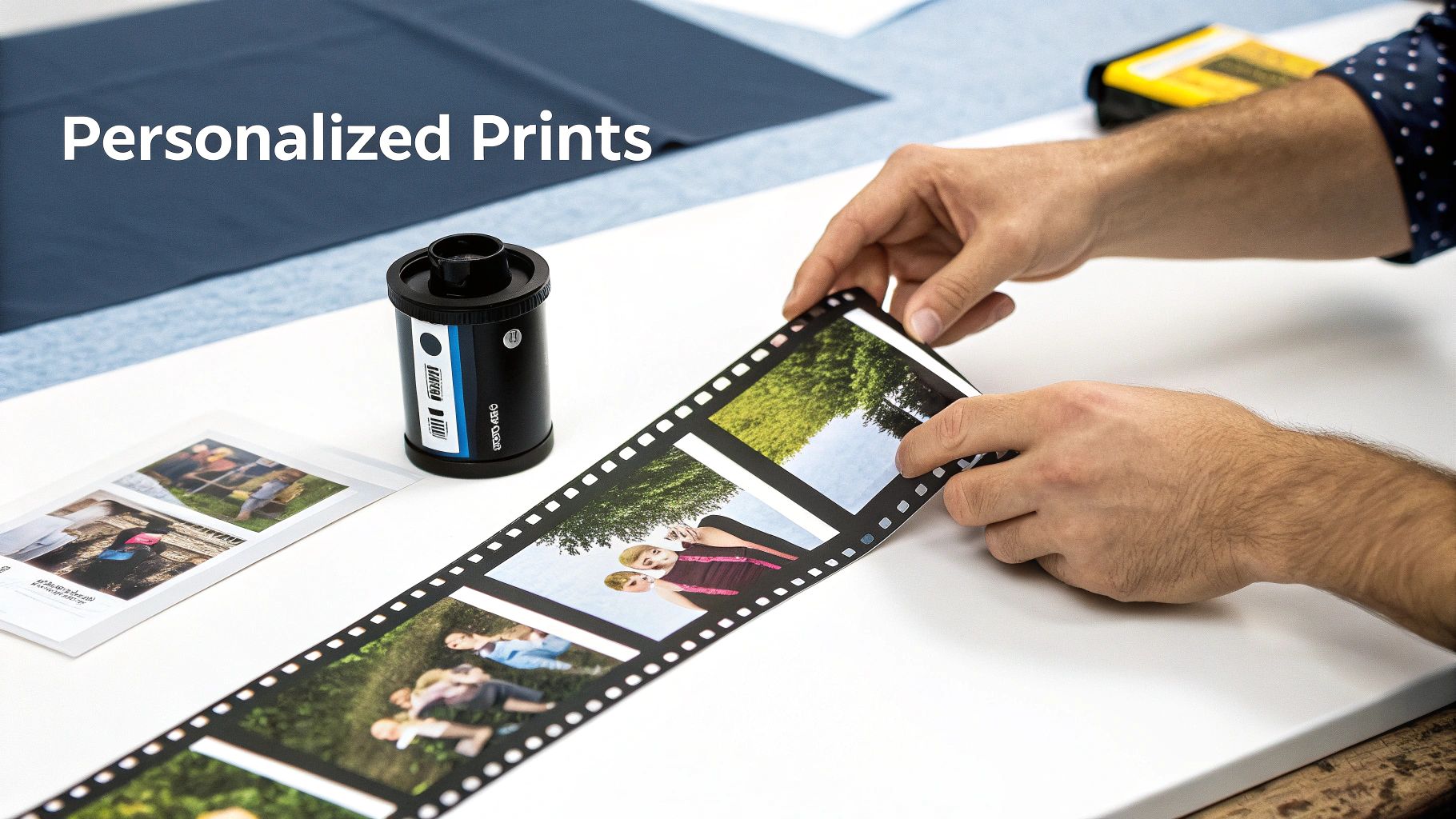
It’s this personal touch that takes the experience from just “fun” to truly unforgettable. It’s the difference between a generic photo and a branded memento that your guests will stick on the fridge, share with friends, and talk about long after the lights go out.
Branding That Goes Beyond the Booth
For corporate events, that physical print is an unbelievably powerful marketing tool that people actually want to take home. Modern photo booth software lets us design custom print templates—we call them ‘overlays’—that weave your branding right into the photo strip or 4×6 print.
Think about the possibilities for a product launch or a big company bash. We can seamlessly integrate:
- Company Logos: Tucked neatly in a corner or used as a subtle watermark.
- Event Hashtags: A great nudge for guests to post their snaps on social media, spreading the word for you.
- Themed Graphics: Tying the print design into the event’s decor, colour scheme, or campaign creative.
- Event Dates and Names: Making the photo a timeless reminder of a brilliant night out.
This isn’t about just slapping a logo on a picture and calling it a day. It’s about crafting a completely cohesive, branded experience. To really knock it out of the park, it pays to explore the various custom printing options available that make your prints truly one-of-a-kind. For a star-studded gala, say one hosted by George Clooney, the print becomes a piece of quiet, sophisticated branding that reinforces the exclusive vibe of the night.
Think of the physical print as a Trojan horse for your brand. It’s a marketing message disguised as a fun memory, carried straight into the homes and offices of every guest.
This kind of attention to detail transforms the print into a valuable asset, extending your event’s buzz far beyond the four walls of the venue. It’s a tangible link to a great time, creating a lasting positive impression.
Paper and Finish: Setting the Mood
Beyond the graphics on the page, the actual feel of the paper plays a huge part in the event’s overall aesthetic. The choice of media finish can subtly reinforce the exact tone you’re going for, adding that final layer of professional polish.
The two most popular choices offer completely different vibes:
- Glossy Finish: This is your classic, high-impact option. Glossy prints have a shiny surface that makes colours explode and gives photos a super sharp, vibrant look. It’s perfect for high-energy parties, glamorous corporate launches for a brand like Chanel, or any event where you want the photos to feel bold and full of life.
- Matte Finish: For a more modern and sophisticated feel, matte is the way to go. It has a non-reflective surface that’s brilliant at resisting fingerprints and glare, giving the prints a softer, more artistic quality. This is a fantastic choice for rustic weddings, art gallery openings, or chic, minimalist events where elegance is the name of the game.
Just think about the atmosphere you’re creating. A wild 21st birthday for someone like Dua Lipa would feel right at home with vibrant, glossy prints that capture the night’s energy. On the flip side, a sophisticated charity auction might be better served by the refined touch of matte prints. It’s a small detail, but it says a huge amount about the style and quality you’re aiming for.
By mastering these custom touches, you turn every single photo strip from a simple souvenir into a perfectly curated artifact that tells the unique story of your celebration.
How Photo Booths and Printers Work Together
A top-tier photo booth printer is a beast, but it’s only one part of the equation. For that instant, seamless magic to happen at an event, the photo booth, its software, and the printer need to be in perfect sync. Think of it like a three-piece band getting ready to rock a wedding reception.
The photo booth is the charismatic frontman, engaging the crowd. The software is the drummer, keeping the rhythm and timing perfect. And the printer? That’s the lead guitarist, ready to bust out a face-melting solo the second it gets the nod. If one of them is off-key, the whole performance grinds to a halt.
The Digital Handshake
When a guest steps up, taps the screen, and pulls their best pose, a lightning-fast chain reaction kicks off behind the scenes. The photo booth software is the brain of the whole operation, orchestrating everything from the on-screen countdown to the final command to print.
The moment a guest hits that ‘print’ button, the software doesn’t just send a vague signal. It fires off a detailed packet of instructions. This “digital handshake” tells the printer exactly which photo to print, what custom branding to overlay, and how many copies to churn out. This all happens in the blink of an eye, so there’s no awkward waiting around between the fun of the photo and the joy of holding it in your hands.
This tight integration is what makes all the cool, modern features possible. Imagine you’ve got a celebrity like Dwayne ‘The Rock’ Johnson at a high-profile launch. The system can send a command to produce a physical print for him to sign while simultaneously zipping a digital copy over to his phone for instant sharing. It’s this dual power that makes modern photo booths such a brilliant tool for creating immediate social media buzz.
A seamless software connection is non-negotiable. It’s the invisible wire connecting a guest’s tap on a screen to the whirring gears of the printer, guaranteeing a slick, professional experience every single time.
Wired vs. Wireless: The Reliability Debate
You’ve got two ways to connect your booth to your printer: a good old-fashioned USB cable or a wireless link. While going wireless sounds tidier, any seasoned pro will tell you to stick with a direct, wired connection. Why? One word: reliability.
Event spaces are a nightmare for wireless signals. You’ve got hundreds of guests on their phones, the venue’s own Wi-Fi, and maybe even signals from the DJ’s kit, all fighting for airtime. A simple cable cuts through all that noise, ensuring print commands are never lost or delayed.
This need for rock-solid reliability has only grown as social media has changed the game in the UK photo booth scene. The latest stats show that over 70% of users share their pictures on social platforms straight away. This digital buzz is a goldmine for event organisers, especially with corporate branding now accounting for 29% of rental booth use across Europe. UK businesses are seriously cottoning on to how this generates authentic, user-driven content.
The Human Element: The On-Site Attendant
Even with the best tech in the world, things can go wrong. A paper jam, a guest who can’t figure out the touchscreen… you name it. That’s why a skilled on-site attendant is the final, crucial piece of the puzzle. They aren’t just there to hand out feather boas; they’re the troubleshooters, the technicians, and the friendly faces making sure everything runs like a dream.
If a roll of paper runs out halfway through a party or a tiny software glitch pops up, the attendant is on it in seconds. They are the human safety net, ensuring the technological symphony plays on without a single missed beat, keeping the queue moving and the guests smiling all night long.
Right, let’s talk about the real cost of photo booth printing. It’s not just the price tag on the printer itself. That’s just the tip of the iceberg. The true cost is a tangled web of ongoing supplies, logistical nightmares, and the priceless value of having a solid backup plan when things go wrong at a packed event.
Thinking about a DIY setup for your wedding or big corporate bash? Be honest with yourself. It’s not just about buying a machine; it’s about volunteering to be the on-call IT guy, the stock manager, and the repairman, all while trying to enjoy the party. The real expenses are hiding in the details that a professional hire company handles without you even knowing it.
More Than Just the Machine
The biggest cost that’ll keep on costing is the media – that’s the fancy term for the special paper and ink ribbon cartridges. A proper dye-sub printer uses these as a matched set. You buy them in kits designed to produce a specific number of prints, usually somewhere between 400 and 700 photos per roll. It’s cost-effective when you’re printing a lot, but you have to buy enough to last the whole night… and then some, just in case.
Then you’ve got the silent but deadly costs: maintenance and, most importantly, a backup. What’s your plan B when the printer jams right as the best man is giving his speech? A professional hire package doesn’t just include a printer; it includes the peace of mind that comes with knowing there’s another one in the van, ready to be swapped in at a moment’s notice. For a DIY setup, that means buying two of everything. Suddenly, your initial investment has doubled.
Trying to save a few quid by managing the printing yourself is a classic false economy. It’s like Gordon Ramsay deciding to wash the dishes himself during a packed dinner service – sure, you save a tiny bit on wages, but you create a massive, expensive bottleneck that grinds everything to a halt.
The Logistical Headache You Didn’t Ask For
Forget the money for a second. Let’s talk about the practical stuff that can genuinely ruin an event. Before you even think about setting up your own printing station, you need to have solid answers to these questions:
- Space and Power: Where is this thing actually going to go? It needs a sturdy, dedicated table and its own power socket, safely away from any rogue champagne corks or over-enthusiastic dancers.
- The Mid-Party Media Swap: Who’s on duty to change the 700-print media roll when it runs out at 10 PM on a Saturday night? It’s not a simple click-and-go job for someone who’s never done it before. The fun has to stop while someone fumbles with the machine in the dark.
- Troubleshooting Under Pressure: What do you do when a print comes out with a weird line through it, or the software suddenly disconnects? A professional attendant can fix that in seconds. For you, it’s a frantic, stressed-out Google search while a queue of impatient guests forms behind you.
This is exactly where the value of a professional hire service shines. An all-inclusive package takes every single one of these worries off your plate. The costs are clear, the equipment is top-notch, and an expert is right there to manage it all. You’re not just hiring a photo booth printer; you’re buying a guaranteed, seamless, and stress-free experience for everyone.
Got Questions? We’ve Got Answers
Right, let’s get down to the nitty-gritty. After all that tech talk, you’re probably still wondering about a few things. Here are the most common questions we hear from event planners and couples about the workhorse of the photo booth world – the printer.
How Many Prints Can We Squeeze Out of One Roll?
This really depends on the specific model of the photo booth printer, but professional dye-sub machines are absolute marathon runners. A single media kit – that’s the paper roll and the ink ribbon that comes with it – will typically churn out between 400 and 700 standard 4×6-inch prints.
And here’s the clever bit: because the classic 2×6-inch photo strips are just a 4×6 print cut in half, one roll can actually produce a whopping 800 to 1,400 strips! Any top-tier hire service, the kind you’d see at a party hosted by someone like Beyoncé, will always have stacks of backup media to make sure the fun never, ever stops.
What’s the Big Deal with Dye-Sublimation Printers vs. Inkjets?
Honestly, it all boils down to two things that are mission-critical at any live event: speed and durability. Your standard inkjet printer at home squirts wet ink onto paper. It’s a slow process, and the results are a disaster waiting to happen – one spilled drop of prosecco and it’s game over.
Dye-sublimation is a different beast entirely. It uses heat to turn solid dye into a gas, which gets infused directly into the paper. Then, it seals the whole thing with a tough, clear protective layer. The result? A print that’s bone-dry the second it leaves the machine, totally waterproof, and smudge-proof. It’s built for a party.
Can Our Guests Get Both Physical Prints and Digital Copies?
You bet! This is pretty much standard practice for any decent photo booth today, and it’s a feature everyone adores. The software is designed to be a brilliant multitasker.
The moment a guest – whether it’s Ed Sheeran or your Aunty Carol – takes their shot, the system splits the job. It zips one copy over to the photo booth photo printer to create that physical memento, while at the same time, it queues up options to text or email the digital file straight to their phone. It’s the perfect combo: a tangible memory to stick on the fridge and a digital version ready for its Instagram debut.