
Choosing the right photo booth camera isn’t just a technical detail—it’s the secret sauce for capturing those priceless, laugh-out-loud moments that make an event unforgettable. Think of the camera as the engine in a high-performance sports car. It dictates the speed, the quality, and the sheer thrill of the ride.
From a rustic wedding barn to a sleek corporate launch party with a guest list that could include Taylor Swift, the right camera is what turns a fun novelty into a must-have experience that has guests queuing up for their turn in the spotlight.
Smile! You’re on Camera: The Heart of Every Photo Booth
Welcome to the wild world of photo booths, where the camera is the undisputed star of the show. You wouldn’t put a lawnmower engine in a Lamborghini, and the same thinking applies here. Your choice of camera is the single most important factor in producing those crisp, vibrant, and instantly shareable photos that everyone loves.
This is about more than just snapping pictures; it’s about crafting an interactive, high-energy experience. A top-notch camera is the magic ingredient that elevates a great party—like a star-studded gala where you might spot celebrities such as Idris Elba—into something truly legendary.
Why the Right Camera is a Total Game-Changer
The appetite for amazing photo experiences has absolutely exploded, which means the tech behind the lens has never been more crucial. The UK photo booth market is a perfect example of this boom. It was valued at a whopping USD 42.69 million in 2024 and is expected to nearly double by 2033. This incredible growth is all down to the demand for high-quality, interactive fun at events up and down the country. You can dive deeper into the booming UK photo booth market for more insights.
A great photo booth camera does so much more than just take a picture; it captures the very energy of the room. It makes sure every snapshot is flattering, fun, and primed for its social media debut, turning happy guests into your biggest fans and creating memories that last.
Getting to grips with the main camera types is your first step. This guide will walk you through the different kinds of photo booth cameras out there and help you figure out which one is the perfect match for your next event. We’ll cover everything you need to know to make sure every single shot is picture-perfect.
Meet the Contenders: DSLR vs Mirrorless vs Webcam
Picking the right camera for your photo booth is a bit like casting the lead in a movie. You need the right star for the right role. Get it wrong, and the whole production falls flat. Get it right, and you’ve got a blockbuster on your hands. So, let’s meet the main contenders vying for the part.
First up, we have the DSLR (Digital Single-Lens Reflex) camera. This is your seasoned A-lister, the Meryl Streep of the camera world. It’s the industry workhorse, known for delivering a flawless, high-quality performance every single time. DSLRs are legends for a reason: incredible image quality, super-fast response times, and rock-solid reliability. They produce those crisp, high-resolution photos that look fantastic in print. This is the camera you bring in when quality is everything—think a high-end fashion launch or a fairytale wedding.
The Sleek Innovator and the Digital Native
Next in the lineup is the Mirrorless camera. This is the cool, up-and-coming star who’s shaking up the scene, like Zendaya. By ditching the old-school mirror mechanism found in DSLRs, these cameras are lighter, more compact, and seriously quick on the draw. They often have an edge in moody, low-light settings, which makes them perfect for those atmospheric evening parties or dynamic 360° video booths where you need to be nimble.
And finally, we have the humble Webcam. Don’t underestimate this one. It’s the dependable character actor of the group—affordable, ridiculously easy to work with, and always ready for its cue. While it might not have the raw star power of a DSLR or Mirrorless, a good quality webcam is the go-to choice for digital-only gigs. We’re talking fun GIF booths, virtual events, or social media kiosks where the main goal is to create instantly shareable moments. It’s a smart, budget-friendly pick for the right job.
You wouldn’t cast a slapstick comedian like Will Ferrell in a serious historical drama, would you? The same logic applies here. A DSLR brings that classic, polished feel. A Mirrorless camera adds a touch of modern flair. And a Webcam delivers pure, accessible fun.
Camera Type Showdown for Your Photo Booth
To help you decide which of these ‘actors’ should take centre stage at your next event, I’ve put together a simple head-to-head comparison. This table cuts through the noise and focuses on what really matters for a photo booth.
| Feature | DSLR Cameras (The Pro) | Mirrorless Cameras (The Innovator) | Webcams (The Digital Native) |
|---|---|---|---|
| Image Quality | Excellent, highest resolution, best for prints. | Very good to excellent, great for digital and prints. | Good for digital, but lower resolution for prints. |
| Performance | Fast and reliable, excellent in low light with flash. | Very fast autofocus, strong low-light performance. | Simple and effective, but struggles in poor lighting. |
| Size & Weight | Larger and heavier, requiring a sturdy setup. | Compact and lightweight, ideal for mobile or 360° booths. | Extremely small and lightweight, plug-and-play setup. |
| Best For | High-end events, weddings, corporate galas. | Modern booths, 360° video, stylish corporate events. | GIF booths, virtual events, budget-friendly parties. |
Ultimately, there’s no single “best” camera—only the best camera for the specific experience you want to create. This table should give you a solid starting point for making that crucial casting decision.
Matching the Camera to the Booth Experience
Let’s get one thing straight: not all photo booths are built the same, and the camera you pick is the heart of the whole operation. It dictates the entire vibe. Get this match right, and you’re not just taking pictures; you’re creating unforgettable moments. Get it wrong, and… well, let’s not go there.
Imagine a swanky Mirror Booth at a black-tie wedding where Beyoncé might be a guest. The guests are dressed to the nines, expecting a flawless, red-carpet experience. This is no time for a fuzzy webcam. A DSLR camera is non-negotiable here. Its superior image quality guarantees every sparkly detail is razor-sharp and every print looks like it belongs in a magazine. It’s all about delivering that premium, polished feel the booth promises.
Tailoring Tech to the Vibe
Now, let’s switch gears. Picture a high-energy 360° Booth, where guests are throwing shapes in glorious slow-motion. The camera needs to be quick on its feet—light, agile, and able to spin around the platform without causing a wobble. This is where a lightweight mirrorless camera or even a top-tier smartphone shines. They offer that perfect mix of stunning video quality and nimble performance, capturing fluid, exciting clips that are just begging to be shared on social media.
And what about a quirky, casual GIF Booth at a student party? The goal is pure, unadulterated fun that can be shared in an instant. A high-quality webcam is the unsung hero of this scenario. It creates fantastic, looping animations that capture the goofy spirit of the moment, all without nuking the budget. Here, shareability trumps print-level perfection every time.
Think of it this way: choosing the right camera isn’t just a technical task; it’s a creative one. The camera’s capabilities must match the booth’s personality—whether that’s elegant and sophisticated, fast and energetic, or playful and digital.
This decision tree gives you a great visual guide, helping you figure out which camera aligns with what you’re trying to achieve, from high-end quality to digital-first fun.
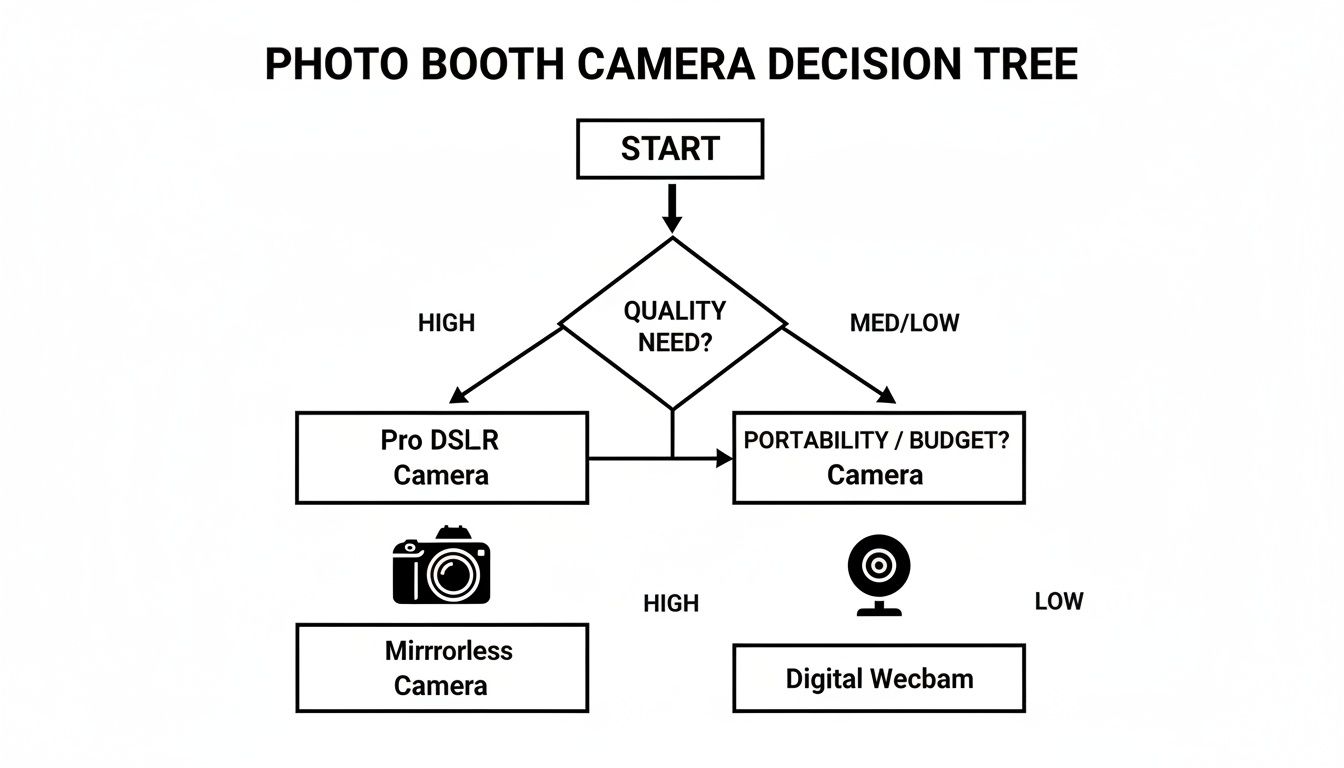
It really simplifies the choice, showing a clear path from what you need in terms of quality and budget to the ideal camera for your booth.
From Classic Booths to Digital Walls
This same logic applies right across the board. That classic, enclosed photo booth? It loves a DSLR that can master controlled lighting for perfect portraits. On the flip side, an interactive digital graffiti wall, where guests draw all over their photos, works brilliantly with a snappy webcam or tablet camera built right into the touchscreen.
The UK photo booth scene really hammers this home. Innovations like GIF booths are now a staple, popping up at an estimated 80% of marriages. Meanwhile, high-end booths with touchscreens account for 62% of sales. This isn’t surprising when you realise 93% of adults own a smartphone, making instant digital sharing a massive part of any event experience. You can dig deeper into the trends in the European photo booth market if you’re curious.
At the end of the day, pairing the right camera with the right booth creates an experience that just works. It feels intuitive, looks impressive, and leaves guests with memories they’ll be talking about long after the party’s over.
The Tech Specs That Genuinely Make a Difference
Let’s be honest, staring at a camera’s spec sheet can make your eyes glaze over. It’s a sea of numbers and jargon. But you don’t need to be a photography boffin to get this right. We’re going to skip the fluff and focus on the handful of settings that truly separate a blurry mess from a brilliant memory.
Think of this as your secret decoder ring for camera tech.
First on the list is megapixels (MP). It’s easy to get caught up in a numbers race, but what really matters here is print quality. More megapixels let you blow up your photos into larger prints without them looking pixelated. For the kind of crisp, gorgeous keepsakes guests will actually want to put on their fridge, anything over 12MP will do the job beautifully.
Aperture and ISO: Your Best Mates in Low Light
Now, let’s chat about aperture. You’ll see this written as an “f-number,” like f/1.8. In simple terms, this is the pupil of your camera’s eye. A lower f-number means a wider opening, letting in more light – an absolute lifesaver in dimly lit wedding receptions or moody corporate events. It’s also the secret sauce behind that lovely, soft background blur (the pros call it ‘bokeh’) that makes your subjects pop.
Then you’ve got ISO, which is basically how sensitive your camera is to light. Cranking up the ISO helps you get a good shot in near darkness without a flash. But there’s a catch. Push it too far, and your photos start to look grainy. The sweet spot is a camera that can handle a higher ISO without turning your pictures into a noisy mess.
A camera’s mastery of low light, thanks to a great aperture and ISO range, is what elevates a photo booth from a novelty to a pro-level experience. It’s the difference between flat, deer-in-the-headlights flash photos and vibrant, flattering portraits, no matter the lighting.
Shutter Speed: The Key to Freezing the Fun
Last but not least, we have shutter speed. This is all about how quickly the camera takes the picture. In a photo booth, people are rarely standing still – they’re laughing, jumping, and striking ridiculous poses. A fast shutter speed (think 1/125s or quicker) is essential to freeze that motion. It’s how you capture that perfect mid-air jump or hysterical laugh with absolute clarity, avoiding any blurry streaks.
Getting these specs right is the engine that drives a fantastic photo booth experience. In fact, the leap in quality from high-res DSLR cameras has been a huge factor in the UK photo booth market, which snagged 20% of the European revenue share in 2024. With over 22,000 units sold globally in 2023, it’s clear people want top-notch photos. You can learn more about the photo booth market’s rapid growth and see just how much great cameras are pushing the industry forward.
Time to Put It All Together: Setup and Pro Tips
Right, you’ve chosen your champion camera. Now it’s time to play director. A truly brilliant photo booth isn’t just about the fancy gear; it’s about making all the pieces dance together. Think of this as your pre-gig checklist to make sure the show goes off without a hitch.
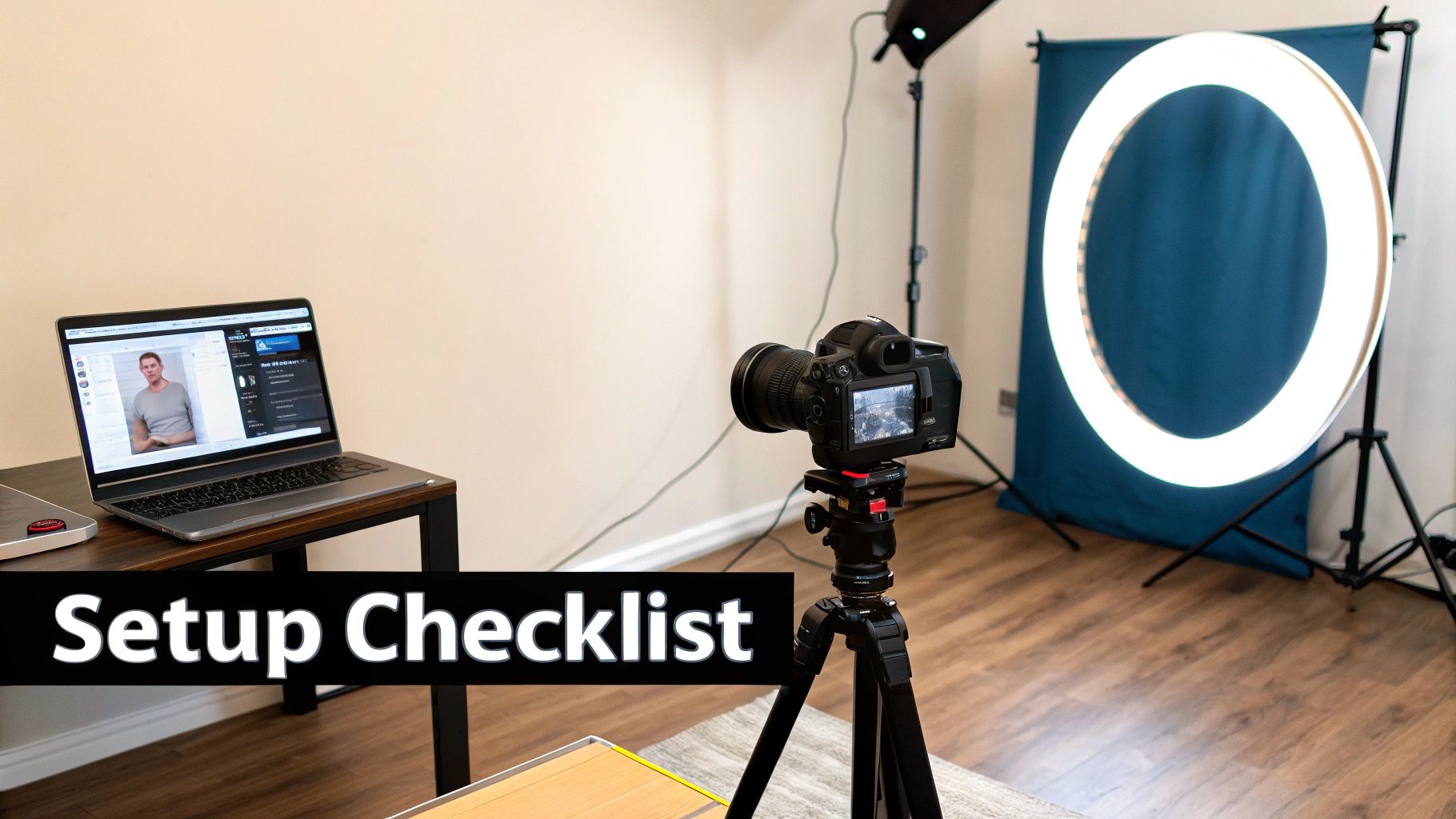
Let’s kick things off with the unsung heroes of every great photo: the lighting and backdrop. Get these two right, and you can turn a bog-standard snap into something that looks like it belongs in a magazine. They’re the stage and the spotlight for your camera.
Lighting and Backdrops: The Dynamic Duo
Seriously, never, ever underestimate good lighting. A simple ring light or a softbox can work wonders, wrapping your guests in flattering, continuous light that kills harsh shadows and makes everyone look ten times better. It’s the secret sauce behind those bright, punchy photos everyone loves.
And the backdrop? It’s not just a background; it sets the entire vibe. A gorgeous flower wall screams wedding romance, while a custom-branded backdrop keeps the corporate message front and centre. It’s the canvas where the memories are made.
Think of your setup as a little film set. The camera might be your A-list star like Dwayne “The Rock” Johnson, but the lighting and backdrop are the crucial supporting actors that make them shine. Nail these, and every shot is a blockbuster.
Your Pre-Flight Technical Checklist
Before the first guest even thinks about stepping in front of the lens, you need to run through your tech checks. This is absolutely non-negotiable if you want a smooth, stress-free event.
- Connect and Tether: First things first, get your camera securely plugged into your laptop or booth terminal with a USB cable. This is called tethering, and it lets your software boss the camera around for instant previews and a seamless workflow.
- Launch the Software: Fire up your photo booth software (like DSLRBooth or LumaBooth) and double-check that it’s talking to the camera properly.
- Dial In Your Settings: Don’t rely on auto! Manually set your camera’s aperture, shutter speed, and ISO to match the light in the venue. Pop off a few test shots to make sure everything is sharp, bright, and looking ace.
- Test the Full Loop: Do a full run-through of the entire experience. Snap a photo, check it on the preview screen, and then send it to the printer or sharing station. You need to know the whole chain works before you go live.
Making it Fun for the Guests
Once the tech is sorted, your next job is to make the booth completely irresistible. Plonk it in a spot with plenty of foot traffic, but make sure it’s not blocking a fire exit or the path to the bar. You want people to see the fun, get curious, and jump in.
The final ingredient? Props! A daft hat, a silly sign, or a ridiculous pair of glasses can persuade even the most reserved guest to let their hair down and strike a pose. These little touches are what turn a photo booth from a machine into the life and soul of the party.
The Final Frame: Capturing Moments That Matter
When you boil it all down, picking the right photo booth camera isn’t really a tech decision. It’s about investing in pure, unadulterated joy. It’s about bottling up that infectious laugh from a bride, that triumphant team pose at the corporate awards night, or that silly face a grandad pulls with his grandkids. The camera is your silent storyteller, freezing those fleeting moments in time.
As we’ve journeyed through the options, it’s clear the “best” camera is simply the one that fits your event’s unique personality. Sometimes that means the uncompromising quality of a DSLR for a lavish wedding. Other times, it’s the nimble, fast-moving mirrorless for a mind-bending 360° video. And for a quirky GIF booth, the simple charm of a webcam might just be the perfect fit.
Your Toolkit for Success
You’re now armed with the know-how to make a brilliant choice. You get the difference between the core camera types, you know how to match them to the booth style, and you have a checklist to nail the setup. This is your power to create an experience that guests will be buzzing about long after the last feather boa is packed away.
At Harry & Edge, this is what we live for. We obsess over making sure every photo captures the genuine energy and spirit of your celebration, much like a film director captures the perfect, charismatic scene with a star like Emma Watson. Your event deserves nothing less than a blockbuster performance.
Ultimately, that final click of the shutter isn’t just the end of a photo session. It’s the beginning of a cherished memory, a tangible piece of happiness that people get to take home. By putting the right camera at the heart of your setup, you’re not just offering a bit of fun—you’re crafting keepsakes that tell the story of a truly unforgettable day.
Got Questions? We’ve Got Answers.
Still scratching your head about photo booth cameras? Let’s clear a few things up. We get a ton of questions from event planners, soon-to-be-married couples, and marketing pros, so we’ve put together some quick-fire answers to the most common ones.
What’s the Best All-Rounder Camera for a Photo Booth Rental Business?
If you’re running a rental business, you need a workhorse camera that’s versatile, reliable, and delivers knockout quality every time. For our money, a mid-range DSLR like a Canon EOS 250D or a Nikon D3500 is the smartest bet.
These cameras give you that professional-grade image quality for both prints and digital shares, making sure every photo is crystal clear. They’re also built to survive the hustle and bustle of event transport and play nicely with pretty much all professional photo booth software. Most importantly, their manual controls are your secret weapon for adapting to any lighting, from a blazing afternoon festival to a moody, candlelit wedding reception.
Is a Flash Really Necessary for My Photo Booth Camera?
One hundred percent, yes. In fact, it’s non-negotiable. Consistent lighting is the magic ingredient that separates amateur snaps from professional portraits. Relying on whatever light the venue happens to have is a massive gamble—it’s often too dim, too harsh, or flickers between colours.
A dedicated flash, whether it’s a studio strobe or a quality ring light, is your guarantee of bright, even, and flattering light in every single shot. It banishes weird shadows, makes your guests pop, and ensures every image is sharp and vibrant.
Can I Just Use an iPad for a Professional Photo Booth?
Look, iPads are brilliant. Their touchscreens are slick, they run photo booth apps like a dream, and for the right kind of event, they’re a fantastic, budget-friendly option.
If you’re running a digital-only booth at a party, a social sharing kiosk, or a super casual get-together, an iPad can certainly get the job done. But let’s be real: its built-in camera is no match for a proper DSLR or mirrorless camera. For weddings, corporate galas, or any event where people are expecting a beautiful printed photo to stick on their fridge, a dedicated camera is a must. It’s the only way to deliver the high-resolution, professional-looking keepsakes your clients are paying for.